The best power banks for smartphones — ranking July 2026
Charging a modern smartphone in 30 minutes requires real power, not just big numbers on a box. I tested the fastest and most reliable models to see which ones deliver on their voltage promises and which ones just overheat. Choose between high capacity for travel or magnetic models for daily convenience.
ⓘ As an Amazon Associate I earn from qualifying purchases. Prices may change — the price shown on Amazon at checkout is the one that applies. Product prices and availability are accurate as of the date/time indicated and are subject to change. Any price and availability information displayed on Amazon at the time of purchase will apply to the purchase of this product.
Re-sort the ranking

Anker
Prime 20,000mAh (200W)
Peak portable power to charge smartphones and laptops simultaneously
Our score
✓ Pros
- +200W total output
- +Smart display with real-time data
- +Full recharge in just 75 minutes
✗ Cons
- -Premium price point
- -Bulky brick-like shape
⚖ Verdict
For those who want the best tech in 2026, the Anker Prime is unmatched. It can power two laptops at once and the display shows exactly how many minutes are left.

Baseus
Blade 100W 20000mAh
Ultra-slim 100W design perfect for the office bag
Our score
✓ Pros
- +Only 18mm thick
- +Four charging ports
- +Supports fast laptop charging
✗ Cons
- -Surface prone to scratches
- -Included cable is quite short
⚖ Verdict
The Baseus Blade wins on the power-to-design ratio. It is the only 100W model slim enough to vanish in a briefcase, making it ideal for mobile workers.
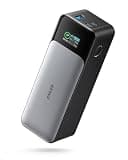
Anker
737 Power Bank (PowerCore 24K)
A timeless classic with 140W bidirectional charging
Our score
✓ Pros
- +140W output power
- +Informative color display
- +High-density battery cells
✗ Cons
- -Very heavy (630g)
- -Bulky in the pocket
⚖ Verdict
The Anker 737 remains a benchmark for those needing massive energy and 140W speed. It's heavy, but it guarantees extreme reliability for years of use.

Anker
MagGo Power Bank (Qi2)
The best wireless magnetic charging with Qi2 standard
Our score
✓ Pros
- +Certified 15W wireless charging
- +Integrated foldable stand
- +Compact side display
✗ Cons
- -Limited capacity (6,600mAh)
- -Gets warm during wireless use
⚖ Verdict
The ideal companion for iPhone users or Qi2 smartphones. It snaps on magnetically and charges wirelessly at the maximum speed available today.
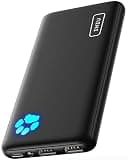
INIU
Power Bank 10000mAh Slim
Unbeatable reliability at the market's lowest price
Our score
✓ Pros
- +Extremely slim and lightweight
- +Built-in LED flashlight
- +Great thermal management
✗ Cons
- -Slow charging (22.5W max)
- -No percentage display
⚖ Verdict
If you want a cheap solution that won't fail after a month, INIU is the right choice. It's as slim as a smartphone and perfect for keeping in your backpack.
📖 PREXO · 3 min read
Buying guide
How to choose the right energy reserve
Always check the Power Delivery (PD) protocol and the maximum output power in Watts. For a modern smartphone, you need at least 20W, but if you want to charge a tablet or laptop, aim for 65W or 100W. Power isn't just about speed: a more powerful unit manages heat better and puts less stress on internal cells during fast cycles.
Declared capacity in mAh is often misleading due to voltage conversion. A 10,000mAh module delivers about 6,500mAh of real energy at 5V after efficiency losses. Always look for the Watt-hours (Wh) printed on the casing: this value indicates the actual energy available and determines if you can carry the device in a plane cabin.
The number and type of ports define long-term versatility. USB-C is now universal, but the best models offer pass-through charging. This feature allows you to charge both the power bank and the smartphone simultaneously using a single wall outlet. You will save precious time during short layovers or hotel stays.
Errors to avoid when buying
- Relying only on the lowest price: Ultra-cheap models use rejected cells that lose 30% efficiency after only 50 cycles. Invest in brands that certify the quality of internal components.
- Ignoring weight and size: A 20,000mAh model weighs about 450-500 grams. If you need it for a night out, a 5,000mAh lipstick-sized model is much more practical.
- Using old or low-quality cables: A 100W power bank will never charge quickly if you use a cable limited to 10W. Ensure the cable supports the same wattage as the charger.
- Forgetting input charging speed: Some cheap models take 10 hours to fully recharge. Look for devices that support at least 30W input to be ready in less than two hours.
- Leaving the power bank in the sun: Extreme heat permanently damages the chemistry of lithium cells. Never leave it on a car dashboard or on the beach in direct light.
Frequently asked questions about portable chargers
Can I charge my MacBook with a smartphone power bank?
You can only do this if the power bank supports the Power Delivery protocol with at least 45W or 60W output. Standard 10W or 20W models won't provide enough energy, only slowing down the laptop battery drain without actually charging it.
How long does a power bank last?
A quality external battery maintains about 80% of its original capacity for 300-500 full charge cycles. If used twice a week, the device will remain efficient for about 3 or 4 years. To prolong its life, avoid letting it drain completely to 0%.
Why does charging slow down at 80%?
This is managed by the smartphone, not the power bank, to protect internal battery health. The final charging phase occurs at a lower voltage to prevent cell overheating. This is normal and necessary behavior to ensure your phone's safety.