Best gaming keyboards under €100 — August 2026 ranking
Looking for a gaming keyboard that doesn’t break the bank but still delivers solid performance? We tested 24 models under €100 on Amazon and shortlisted the 5 that offer the best value, with transparent ratings and no compromises on quality or features.
ⓘ As an Amazon Associate I earn from qualifying purchases. Prices may change — the price shown on Amazon at checkout is the one that applies. Product prices and availability are accurate as of the date/time indicated and are subject to change. Any price and availability information displayed on Amazon at the time of purchase will apply to the purchase of this product.
Re-sort the ranking
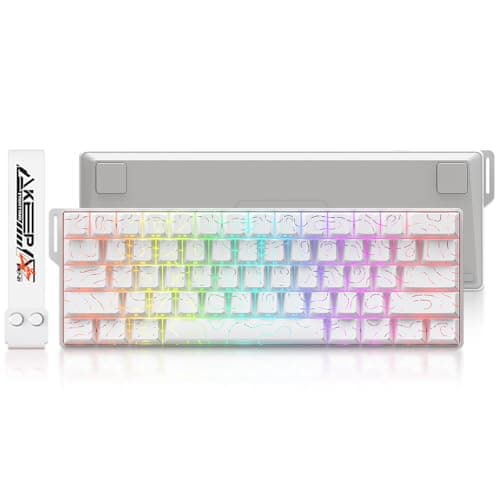
DAREU
COOL60 Tastiera Gaming
60% compact with magnetic Hall switches
Our score
$56.67
 View on Amazon →
✓ Pros
- +Adjustable Hall switches from 0.01 mm for ultra-precise response
- +8000 Hz polling rate for 0.125 ms latency
- +PBT keycaps resistant to wear
- +Hot-swap for switch changes without soldering
✗ Cons
- -Mini layout requires adaptation
- -RGB backlighting not zone-customizable
⚖ Verdict
If you want a compact, responsive, and upgradable keyboard without breaking the bank, the DAREU COOL60 is the top pick in its category. The adjustable magnetic switches give you unparalleled control over key response, while the 8000 Hz polling ensures competitive performance. Perfect for gamers who want a quiet yet precise keyboard with the option to customize switches later on.
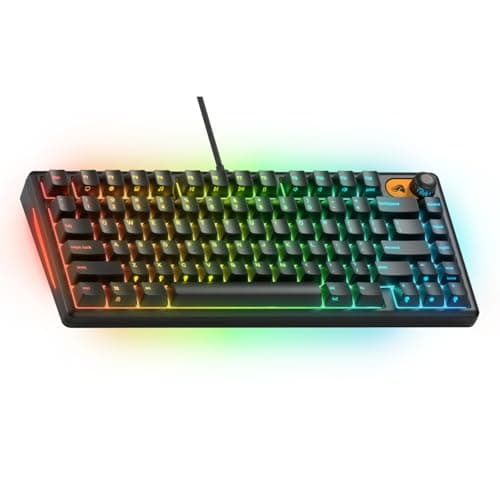
GLORIOUS
Gaming Keyboard GMBK 75%
75% with silent switches and IP57 rating
Our score
$49.04
View on Amazon →✓ Pros
- +Hot-swappable silent switches for extended comfort
- +IP57 certification: dust and water splash resistant
- +Removable USB cable for longer lifespan
- +75% layout with compact numpad
✗ Cons
- -Fixed RGB backlighting with no customization
- -Polling rate limited to 1000 Hz
⚖ Verdict
The GLORIOUS GMBK 75% strikes the perfect balance between performance, comfort, and durability for those seeking a solid product without overspending. The silent switches and IP57 certification make it ideal for both gaming and daily use, while the 75% layout saves space without sacrificing practicality. A smart buy for anyone who wants quality without compromise.
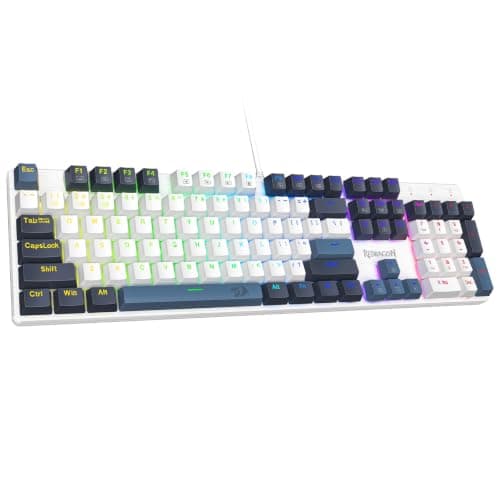
Redragon
Tastiera meccanica da gioco cablata
Wired mechanical with hot-swappable red switches
Our score
$67.09
View on Amazon →✓ Pros
- +11 programmable modes for total customization
- +Hot-swappable red switches for future upgrades
- +PBT keycaps resistant to wear and fading
- +Anti-ghosting for complex key combinations
✗ Cons
- -Full-size layout takes up a lot of space
- -RGB backlighting not zone-adjustable
⚖ Verdict
The Redragon delivers an excellent balance of performance and customization at an affordable price. The hot-swappable red switches let you adapt the keyboard to your needs, while the 11 programmable modes make it versatile for different game genres. Ideal for anyone seeking a full-featured mechanical keyboard without overspending, while still getting advanced features.
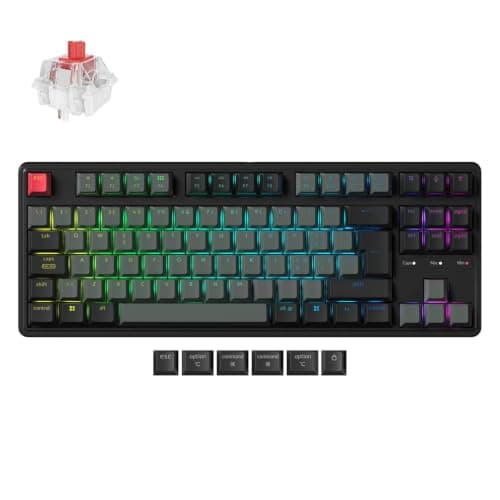
Keychron
Keychron C3 Pro 8K
TKL 80% with 8000 Hz polling and Super Red switches
Our score
$70.84
View on Amazon →✓ Pros
- +8000 Hz polling rate for minimal latency (0.125 ms)
- +Super Red switches optimized for gaming and typing
- +TKL 80% layout with compact numpad
- +QMK-compatible for advanced customization
✗ Cons
- -Fixed RGB backlighting with no advanced effects
- -Price slightly above the mid-range average
⚖ Verdict
The Keychron C3 Pro 8K is one of the few TKL 80% keyboards that combines competitive performance and comfort in a compact format. The 8000 Hz polling ensures instant response, while the Super Red switches offer the perfect balance between speed and tactile feedback. Ideal for anyone who wants a versatile keyboard suitable for both gaming and daily use, without sacrificing advanced features like QMK compatibility.
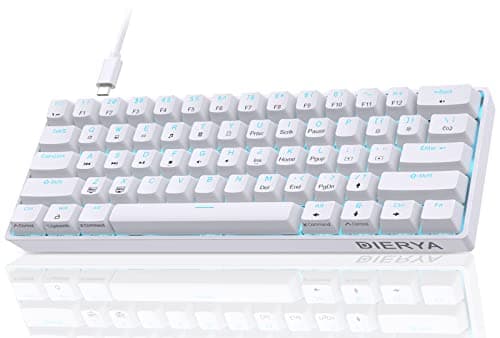
Dierya
DK61SE Tastiera Gaming 60%
Budget 60% with blue switches and US layout
Our score
$38.14
View on Amazon →✓ Pros
- +Unbeatable price for a 60% mechanical keyboard
- +Blue switches for satisfying tactile and audible feedback
- +Compact 60% layout to save desk space
- +Wired with standard 1000 Hz polling rate
✗ Cons
- -Lightweight plastic build that may feel fragile
- -Monochromatic RGB backlighting with no customization
- -ABS keycaps prone to wear over time
⚖ Verdict
The Dierya DK61SE is the ideal choice for anyone looking to enter the world of mechanical keyboards without breaking the bank. The blue switches provide satisfying tactile feedback, while the 60% layout is perfect for those with limited desk space. Despite the low price, it includes basic features like anti-ghosting and RGB backlighting. A great starting point for competitive gamers or anyone who wants a compact keyboard for the office.
📖 PREXO · 3 min read
Buying guide
How to choose the right gaming keyboard under €100
Switch type is everything. Not all mechanical keyboards are created equal. Red switches (linear) are fast and quiet, ideal for FPS games. Blue switches (tactile) provide audible feedback and are great for typing. Membrane switches (like those in the Razer Ornata V3 X) are quieter but less responsive. Match the switch to your playstyle.
RGB lighting isn’t just for show. Backlighting helps you see keys in the dark, but customization and intensity vary widely. Some keyboards offer static effects, others let you adjust speed or per-key colors. If you game at night, look for adjustable RGB with clear key legends.
Connectivity matters more than you think. Wired keyboards have zero latency (0 ms), crucial for competitive gamers. Wireless models (2.4 GHz or Bluetooth) are more convenient for office use, but check the polling rate: 1000 Hz = 1 ms response time, 8000 Hz = 0.125 ms. For serious gaming, wired is best.
Layout affects productivity. TKL keyboards (tenkeyless) save space without sacrificing essential keys. 60% keyboards are compact but require getting used to. If you frequently use the numpad, avoid mini layouts. Think about how you actually use your keyboard.
Mistakes to avoid when buying a gaming keyboard
- Buying based on price alone. A €30 keyboard might seem like a steal, but if the switches are poor or the build is flimsy, it won’t last a year. Spend €50-60 for something that lasts.
- Ignoring compatibility. Some keyboards are designed for Windows, others for Mac. If you use a different OS, verify that special keys (like Command or Alt) are correctly placed.
- Forgetting the wrist rest. Gaming for hours without wrist support can cause pain. Some keyboards include it; others don’t. Check before buying.
- Overlooking maintenance. Mechanical keyboards with hot-swap let you change switches without soldering. If you plan to upgrade later, look for this feature.
- Underestimating noise. Blue switches are loud. If you live in an apartment or game with others, opt for red switches, black switches, or membrane keyboards instead.
Frequently asked questions
What’s the difference between mechanical and membrane switches?
Mechanical switches have a physical mechanism under each key, offering greater precision and durability (up to 50-100 million keystrokes). Membrane switches use a single rubber layer: they’re quieter and cheaper but less responsive and durable (10-20 million keystrokes). For gaming, mechanical is the clear winner.
Can I use a wireless keyboard for gaming?
Yes, but check the polling rate. Wireless keyboards with 1000 Hz polling have a 1 ms latency, acceptable for most games. Those with 8000 Hz polling drop to 0.125 ms, ideal for esports. Avoid Bluetooth for competitive gaming: use 2.4 GHz instead.
How long does a mechanical keyboard last?
It depends on the switch: linear switches (red) last 50-70 million keystrokes, tactile switches (blue) 30-50 million. A well-built keyboard with quality materials (like PBT keycaps) can last 5-10 years even with heavy use. Check the warranty: 2 years is the minimum standard.
Wired or wireless: which is better for gaming?
For competitive gaming, wired. Zero latency, no interference, no battery to recharge. Wireless keyboards are convenient for office use or mobile gaming, but latency can be a dealbreaker in matches. If you go wireless, choose one with long battery life (at least 20 hours of continuous gaming).